Building a custom home typically takes 10 to 16 months from groundbreaking to move-in, with an additional 2 to 6 months for planning and permitting. Your timeline depends on home size, design complexity, material availability, weather conditions, and local permitting processes.
You've purchased land, hired an architect, and selected a builder. Now comes the question everyone asks: when can we move in? Unlike production homes built from standard plans, custom builds follow a unique timeline shaped by your design choices, site conditions, and dozens of moving parts beyond anyone's control.
Key Takeaways
- The average custom home takes 10-16 months to build after breaking ground
- Pre-construction planning and permitting add 2-6 months before construction starts
- Total time from concept to move-in typically spans 12-22 months
- Design complexity, lot conditions, and material selections significantly impact your timeline
- Weather delays, permit revisions, and supply chain issues cause most unexpected extensions
- Experienced builders build buffer time into schedules to account for inevitable delays
Understanding the Complete Custom Home Timeline
The journey to your custom home involves two distinct phases: pre-construction and construction. Most homeowners underestimate the first phase, which lays the foundation for everything that follows.
Pre-construction activities consume 2 to 6 months depending on your location and project complexity. This phase includes finalizing architectural plans, engineering reviews, permitting, and site preparation. In Charlotte and surrounding areas, permit approval alone can take 4 to 12 weeks.
Construction starts once permits are in hand and your builder secures the site. The actual building process follows a predictable sequence, though external factors can shift timelines by weeks or months.

Breaking Down the Construction Phase Month by Month
Once your builder breaks ground, construction follows a sequence that builds on each completed stage. Here's how the timeline typically unfolds.
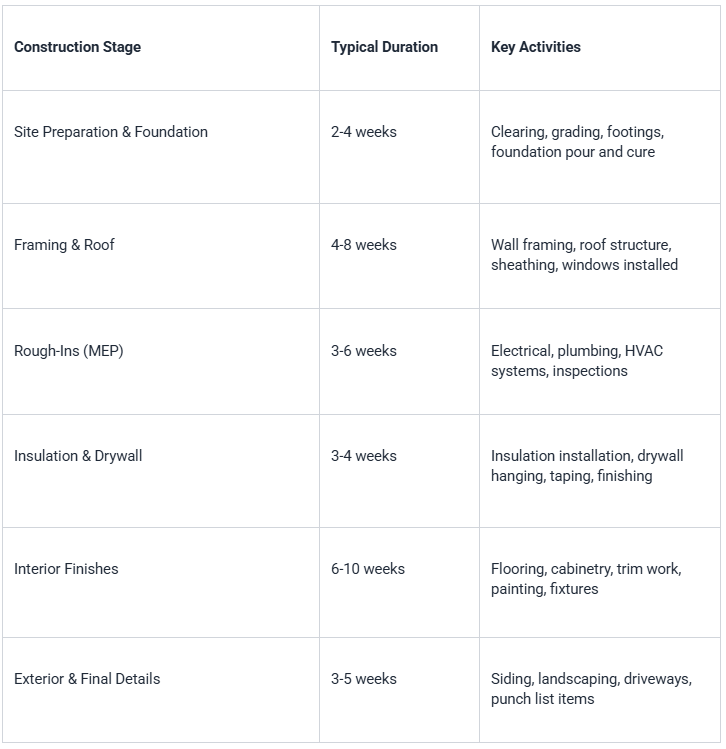
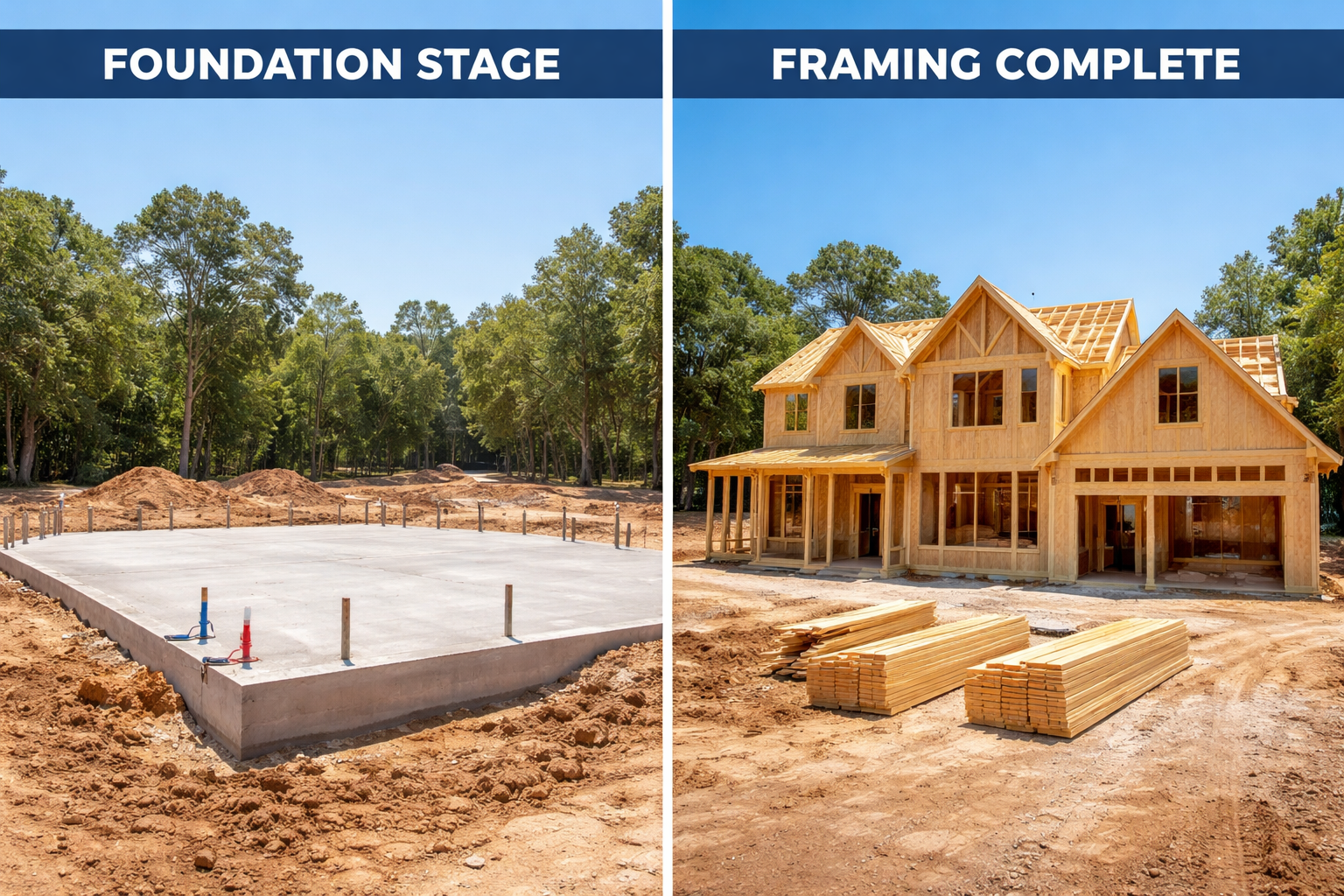
The framing stage feels dramatic because your home takes visible shape quickly. But interior finishes consume the most time. Cabinetry alone might require 8 to 12 weeks from order to installation, which builders account for by ordering early in the process.
Factors That Extend or Compress Your Timeline
No two custom builds follow identical schedules. Several variables push timelines in either direction, some within your control and others beyond it.
Home Size and Complexity
A 2,000-square-foot ranch-style home might be completed in 10 months, while a 5,000-square-foot home with custom details can stretch to 18 months or longer. Each additional bathroom, complex roofline, or custom feature adds days to weeks to your schedule.
Features like luxury home renovation elements, including imported materials, specialty finishes, or smart home integration, extend timelines because they require specialized subcontractors and longer lead times.
Lot Conditions and Site Challenges
Your building site dramatically affects how quickly construction can begin and progress. Sloped lots require additional grading and retaining walls. Properties with poor soil conditions need engineered solutions before foundation work starts.
Wooded lots add time for tree removal and stump grinding. Sites without municipal utilities require well drilling and septic installation, each adding weeks to the pre-construction phase.
Material Selection and Availability
Your finish selections directly impact timeline. Stock cabinets ship in 2 to 4 weeks. Semi-custom cabinetry takes 6 to 8 weeks. Fully custom millwork can require 12 to 16 weeks from design approval to delivery.
Supply chain disruptions since 2020 have made lead times less predictable. Items that once shipped in weeks now sometimes take months. Windows, appliances, and certain plumbing fixtures face the longest delays, occasionally extending projects by 4 to 8 weeks beyond original estimates.
Weather and Seasonal Considerations
Rain halts concrete work and delays roofing. Freezing temperatures prevent foundation pours in some climates. Summer heat can slow certain installation processes.
Starting construction in spring or early summer often yields the smoothest timeline. Winter starts in cold climates can add weeks waiting for suitable weather windows during critical early stages.
Pre-Construction: The Phase Everyone Underestimates
The months before groundbreaking determine whether your construction phase runs smoothly or encounters preventable obstacles. Rushing this phase creates problems that echo throughout the entire build.
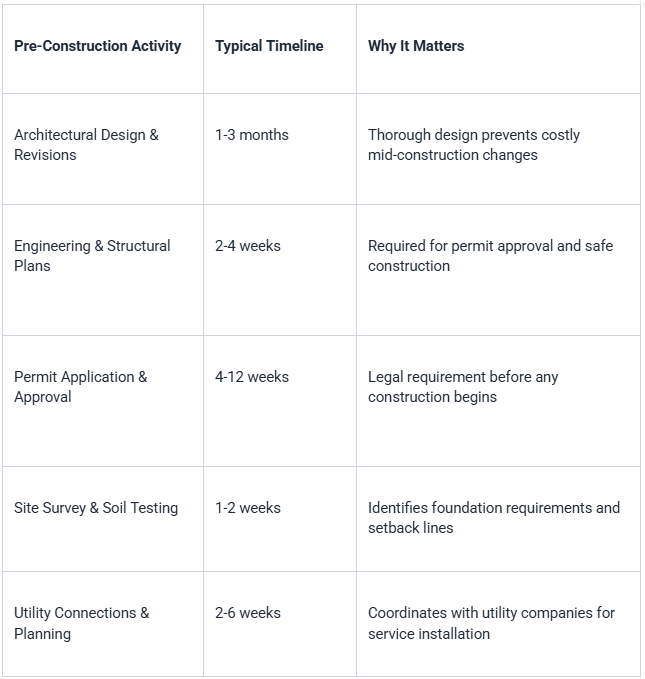
Permit timelines vary wildly by jurisdiction. Some municipalities process permits in 3 to 4 weeks. Others take 3 to 4 months, especially in growing areas where building departments face application backlogs.
Incomplete applications trigger resubmission cycles that add weeks to this phase. Working with experienced builders who understand local requirements helps avoid these delays.
How Builder Experience Affects Your Timeline
Seasoned builders maintain relationships with reliable subcontractors who show up on schedule. They order long-lead materials early. They anticipate permitting requirements and submit complete applications the first time.
Less experienced builders often create their own delays through poor scheduling, inadequate material planning, or unfamiliarity with local permitting processes. The difference can add 2 to 4 months to identical projects.
Builders who specialize in custom work, including those who handle home additions in Charlotte or whole home remodeling in Charlotte, bring valuable experience managing complex timelines and coordinating multiple trades.
Common Timeline Mistakes and How to Avoid Them
Certain mistakes consistently extend custom home timelines. Recognizing these pitfalls helps you avoid them.
- Making design changes during construction: Each mid-build change requires new permits, reordered materials, and schedule adjustments that can add 2 to 6 weeks per change
- Delaying finish selections: Waiting until the last minute to choose flooring, fixtures, or finishes halts progress when those items aren't available when needed
- Underestimating permit timelines: Assuming permits take 2 weeks when local processing requires 8 weeks pushes every subsequent deadline
- Choosing unavailable materials: Selecting items with 16-week lead times when your schedule allows 8 weeks creates unavoidable delays
- Skipping pre-construction planning: Rushing into construction without thorough planning virtually guarantees expensive delays later
- Ignoring seasonal weather patterns: Starting foundation work in late fall in cold climates often means waiting months for suitable conditions

Special Considerations for High-Performance Homes
Building energy-efficient custom homes can extend timelines by 2 to 4 weeks due to specialized installation requirements. Advanced insulation systems, high-performance windows, and integrated HVAC solutions require additional coordination and quality control steps.
These delays prove worthwhile for homeowners prioritizing long-term energy savings and comfort. The extra time ensures proper installation of systems that will perform efficiently for decades.
Realistic Expectations: Building Buffer Into Your Plans
No custom home build proceeds exactly as scheduled. Smart builders and homeowners account for this reality by building buffer time into their expectations.
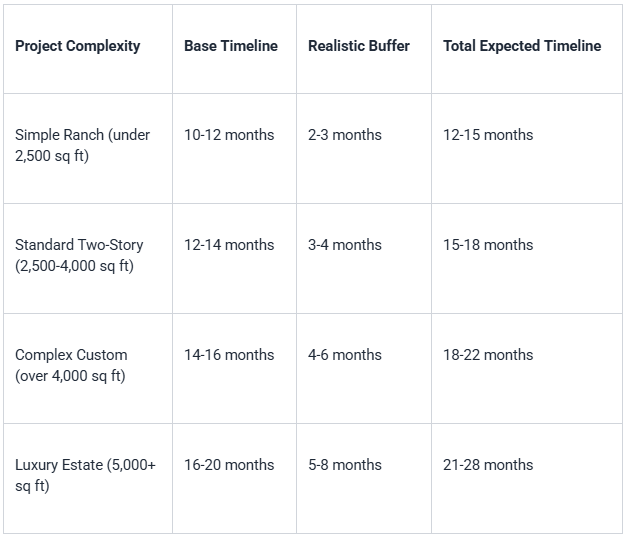
This buffer accounts for weather delays, material backorders, permit revisions, and the dozens of small adjustments that occur in every custom build. Builders who promise aggressive timelines without buffer periods often deliver late, creating frustration and financial stress.
What You Can Control (and What You Can't)
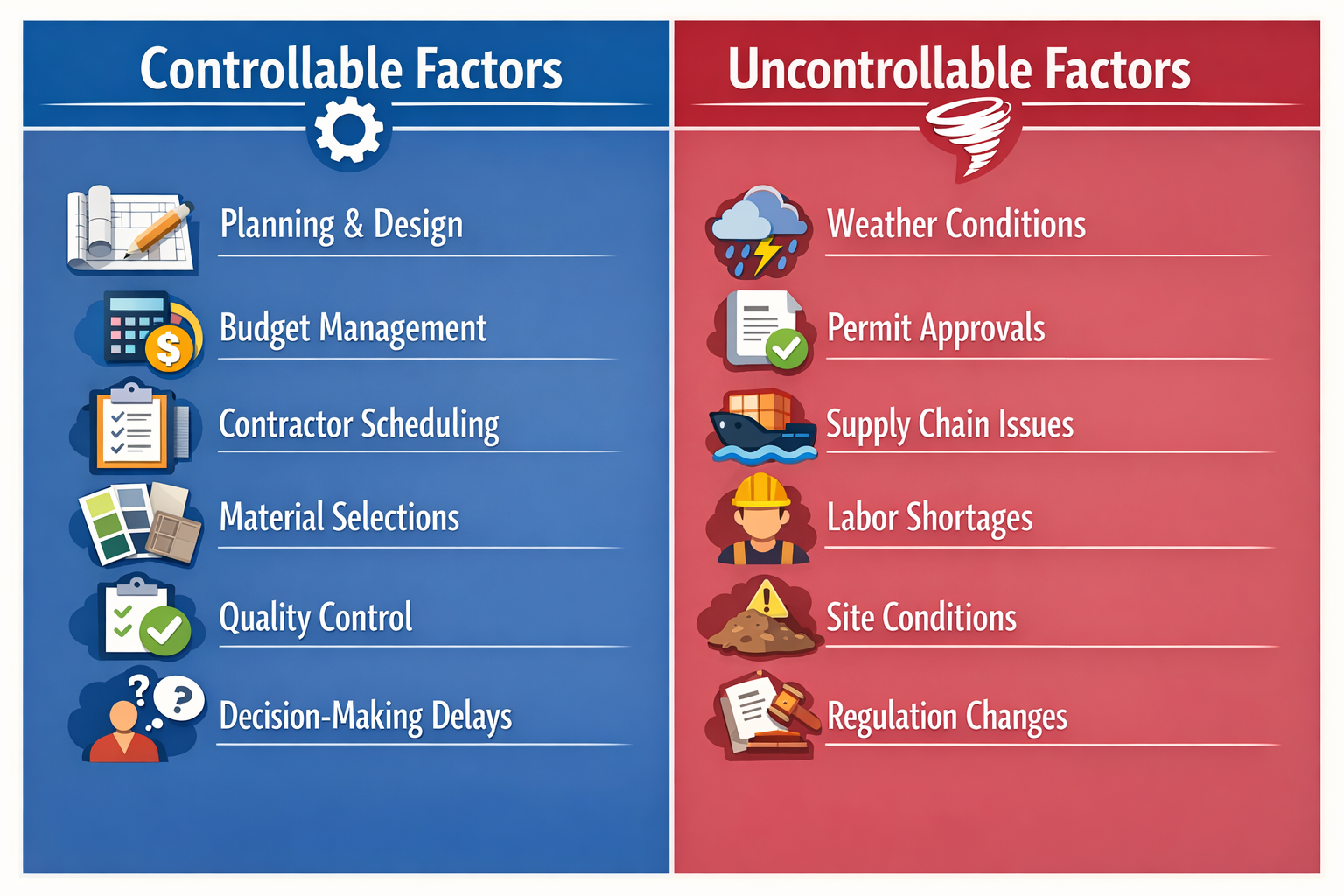
Understanding which timeline factors fall within your influence helps you make decisions that keep your project moving forward.
Within Your Control
- Finalizing designs before construction starts
- Making timely decisions on finishes and materials
- Choosing readily available products instead of long-lead items
- Responding quickly to builder questions and requests
- Maintaining realistic expectations about timelines
- Hiring experienced builders with proven track records
Outside Your Control
- Weather conditions and natural disasters
- Permit office processing speeds
- Material supply chain disruptions
- Subcontractor availability in tight labor markets
- Discovery of unexpected site conditions
- Municipal inspection scheduling
Accepting that some delays are inevitable reduces stress and helps you plan accordingly. Selling your current home or timing lease endings around the optimistic timeline creates unnecessary pressure.
Communication: The Secret to Staying on Schedule
The best builders provide regular timeline updates and flag potential delays weeks before they impact your schedule. Weekly or biweekly updates keep you informed without overwhelming you with daily details.
When delays occur, experienced builders explain the cause, the expected impact, and their plan to minimize timeline extensions. This transparency helps you adjust your plans and maintain realistic expectations.
Ask your builder about their communication process during the interview phase. Builders who struggle to articulate their communication approach often struggle to maintain timelines.
Frequently Asked Questions
How long does it actually take to build a house from start to finish?
From initial concept to move-in, custom homes typically take 12 to 22 months total. This includes 2 to 6 months for design and permitting, plus 10 to 16 months for construction. Simpler homes on easy lots trend toward the lower end, while complex custom homes on challenging sites require more time. Building in seasonal buffer time for weather and inevitable delays keeps expectations realistic.
How much time should I expect BEFORE construction even starts (planning + permits)?
Pre-construction activities typically consume 2 to 6 months depending on design complexity and local permitting timelines. This includes finalizing architectural plans, completing engineering work, submitting permit applications, and waiting for approval. In jurisdictions with backed-up permitting offices, this phase can extend to 8 months. Incomplete permit applications that require resubmission add additional weeks to this timeline.
What causes the biggest delays in a home build?
Material availability issues create the most common delays, especially for custom cabinetry, windows, and specialty fixtures. Weather conditions frequently halt concrete work, roofing, and exterior finishing. Design changes during construction require new permits and material reorders that can add weeks or months. Permit revisions and inspection scheduling also commonly extend timelines, particularly in growing areas with overwhelmed building departments.
Is the builder's estimated timeline realistic?
Most experienced builders provide conservative estimates that account for typical delays. However, timelines assuming perfect conditions rarely materialize. Ask your builder whether their estimate includes buffer time for weather, material delays, and unforeseen issues. Builders who promise completion dates months faster than competitors often deliver late, creating frustration. Request references from recent clients to verify whether the builder typically meets their projected timelines.
How much over budget should I realistically expect to go?
Most custom home builds experience 5% to 15% budget increases due to mid-construction changes, upgrades, or unforeseen site conditions. Maintaining a 10% to 20% contingency fund protects against these overruns. Projects with vague initial specifications or incomplete designs tend toward higher overruns, while thoroughly planned builds with fixed selections typically stay closer to budget. Choosing finishes before construction starts significantly reduces the risk of budget creep.
Plan for Reality, Not the Best-Case Scenario
Custom home construction rewards patience and realistic planning. The journey from concept to completion spans 12 to 22 months for most projects, with timelines varying based on design complexity, site conditions, and material selections.
Working with experienced builders who communicate clearly, build buffer time into schedules, and manage the countless details of custom construction makes the difference between a frustrating process and an exciting journey toward your dream home.
Ready to Start Your Custom Home Journey?
Costner Building Group brings decades of experience building custom homes on realistic timelines in Charlotte and surrounding areas. We'll walk you through every phase, from initial planning to final walkthrough, with transparent communication and proven project management.
Call +1 704 236 6502
Schedule your consultation to discuss your vision, timeline, and budget.